

Research and Perspectives

Research and Perspectives

Explore our resource library to keep up on emerging trends, industry research and more.

Business meeting with diverse professionals discussing strategies at a conference table.
No results found :(
Digital analytics and growth data visualization on a smartphone screen.
09.21.26

7. Model Context Protocol (MCP) Servers in Enterprise AI Architecture

Security researchers have flagged real vulnerabilities in the MCP ecosystem, but nearly all of them trace back to public, third-party servers. In the last paper of Aptive's Agentic AI Governance Series, Ian Meinert separates the risks that actually carry over to self-hosted MCP from the ones that don't, and lays out what federal contractors still owe their agencies as proof they got it right.

READ ARTICLE
Digital security and data protection concept with blockchain and shield icons.
09.14.26

6. Multi-Model and Multi-Agent AI Workflows: Architecture, Risk and DevSecOps Controls

Multi-model and multi-agent AI architectures are now the default way serious enterprise and federal AI work gets built. That power comes with real tradeoffs: expanded attack surface, harder audit trails and governance gaps most teams underestimate. Article 6 of Aptive’s Agentic AI Governance Series lays out the risk taxonomy, a control baseline mapped to NIST 800-53 and the architecture patterns that hold up in regulated environments.

READ ARTICLE
Futuristic AI chatbot icons connected to a central server for AI governance.
09.04.26

5. The Orchestrator Capability Manifest: Governing Tool Access, Prompt Integrity and Model Authorization in Multi-Agent AI Systems

Multi-agent AI systems create an authorization problem most security frameworks were never built to address. Article 5 in Aptive's Agentic AI Governance Series introduces the Orchestrator Capability Manifest, a runtime-enforced policy document that governs which tools each AI agent can use, which prompt version it runs, which model it's pinned to and when a human has to review its output before it moves downstream.

READ ARTICLE
Illustration of AI chatbots connected to a central server for organizational AI governance.
08.25.26

3. Organizational AI Governance: Frameworks, Artifacts and Implementation Guidance

Most AI governance failures aren't technical. They're organizational. In Article 3 of Aptive's Agentic AI Governance series, Ian Meinert breaks down the nine artifacts that turn NIST AI RMF requirements into working governance: risk tolerance statements, accountability matrices, impact assessments, bias evaluation frameworks and more. If leadership hasn't defined what risk the organization accepts, who owns what and what happens when something goes wrong, the technical controls aren't enough.

READ ARTICLE
Data analytics and growth metrics visualization for AI systems.
08.18.26

2. Advanced Operational Maturity for Multi-Agent AI Systems

Passing an ATO review is not the same as staying compliant. This article maps the five gaps between a deployed multi-agent AI system and an operationally mature one: measurement, model risk, data governance, human oversight and continuous assurance, plus the evidence model auditors actually expect to see.

READ ARTICLE
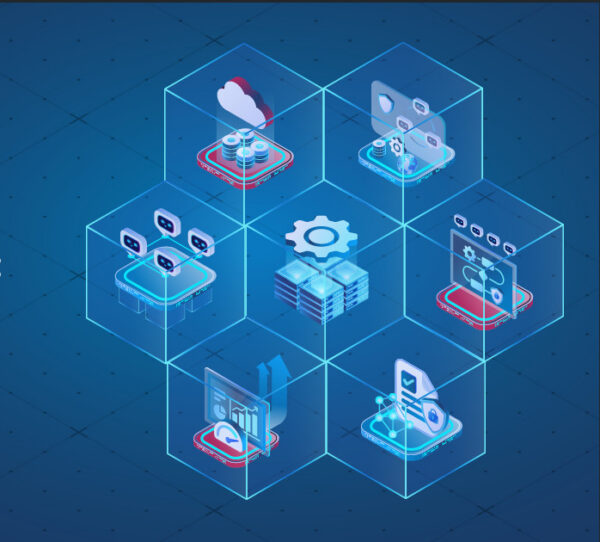
Digital cloud computing and AI governance icons in a futuristic grid.
08.17.26

Agentic AI Governance for Federal Programs: A Contractor’s Perspective 

Federal programs are deploying agentic AI faster than governance frameworks can follow. This seven-paper series, written from the practitioner's side, covers what actually has to work when multi-agent AI moves from pilot to production: security architecture, trust boundaries, governance artifacts, infrastructure and the evidence trail that gets a system through ATO.

READ ARTICLE